Restarting your heart: a cardiac rehabilitation app for young men
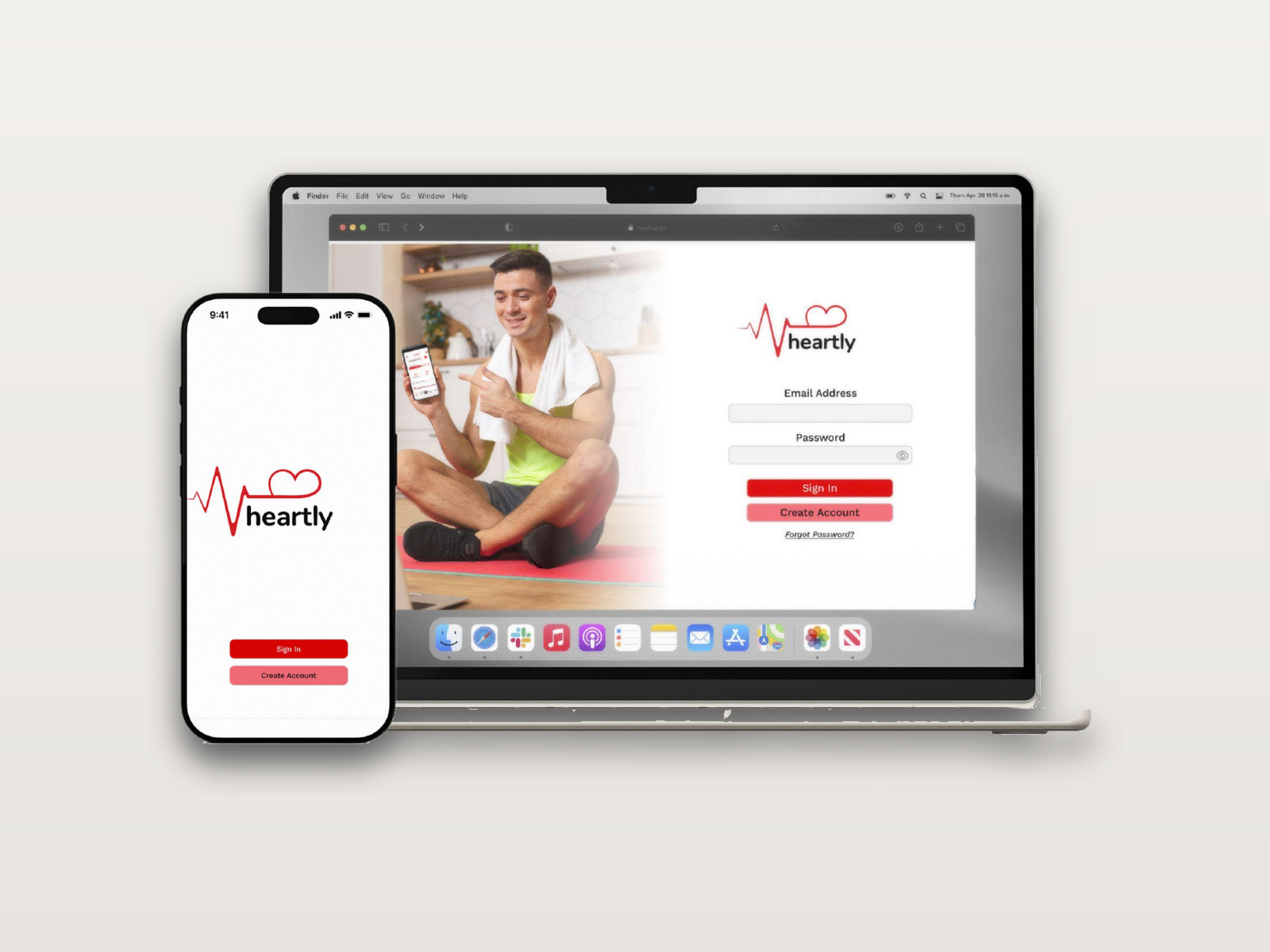
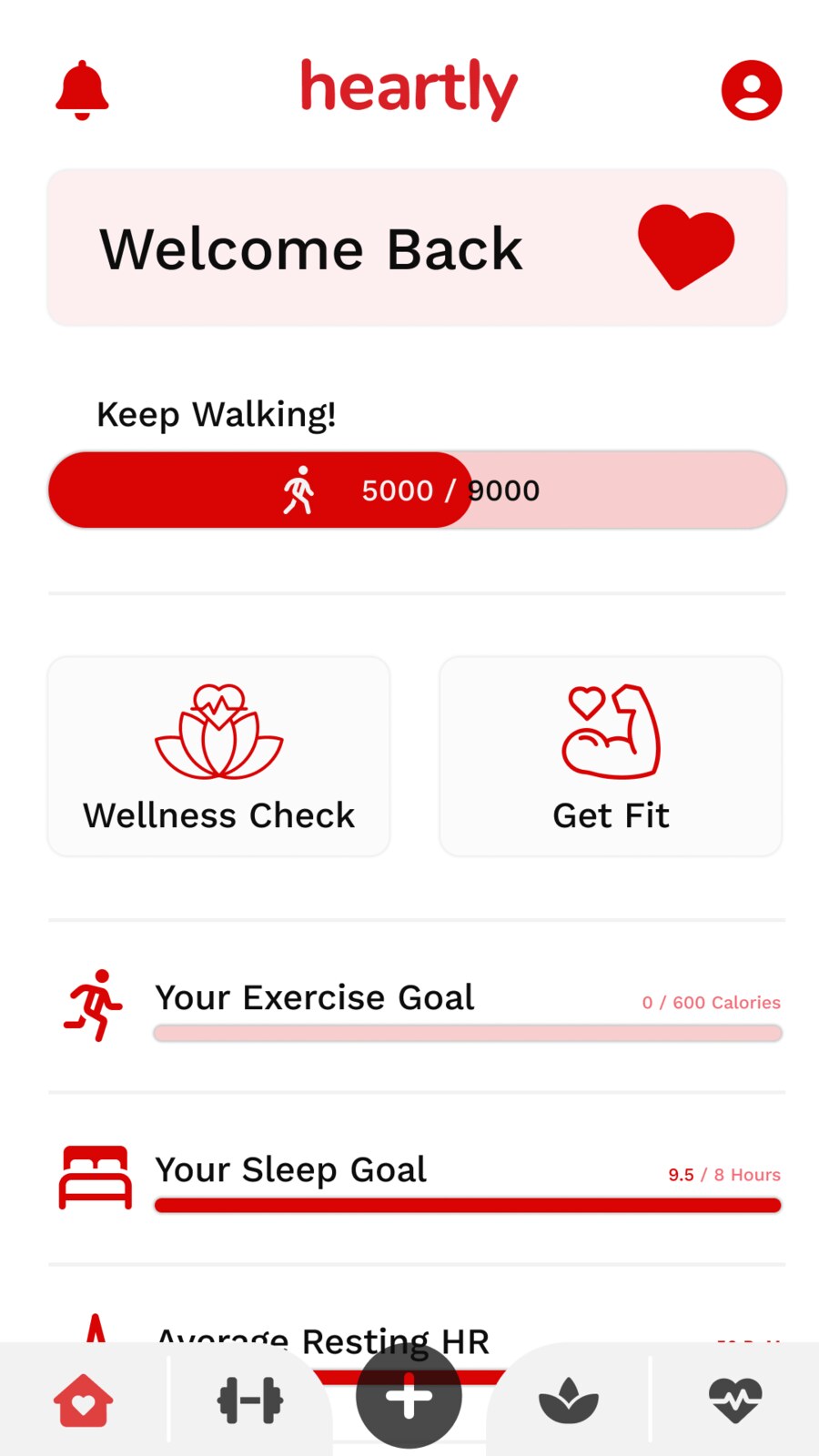
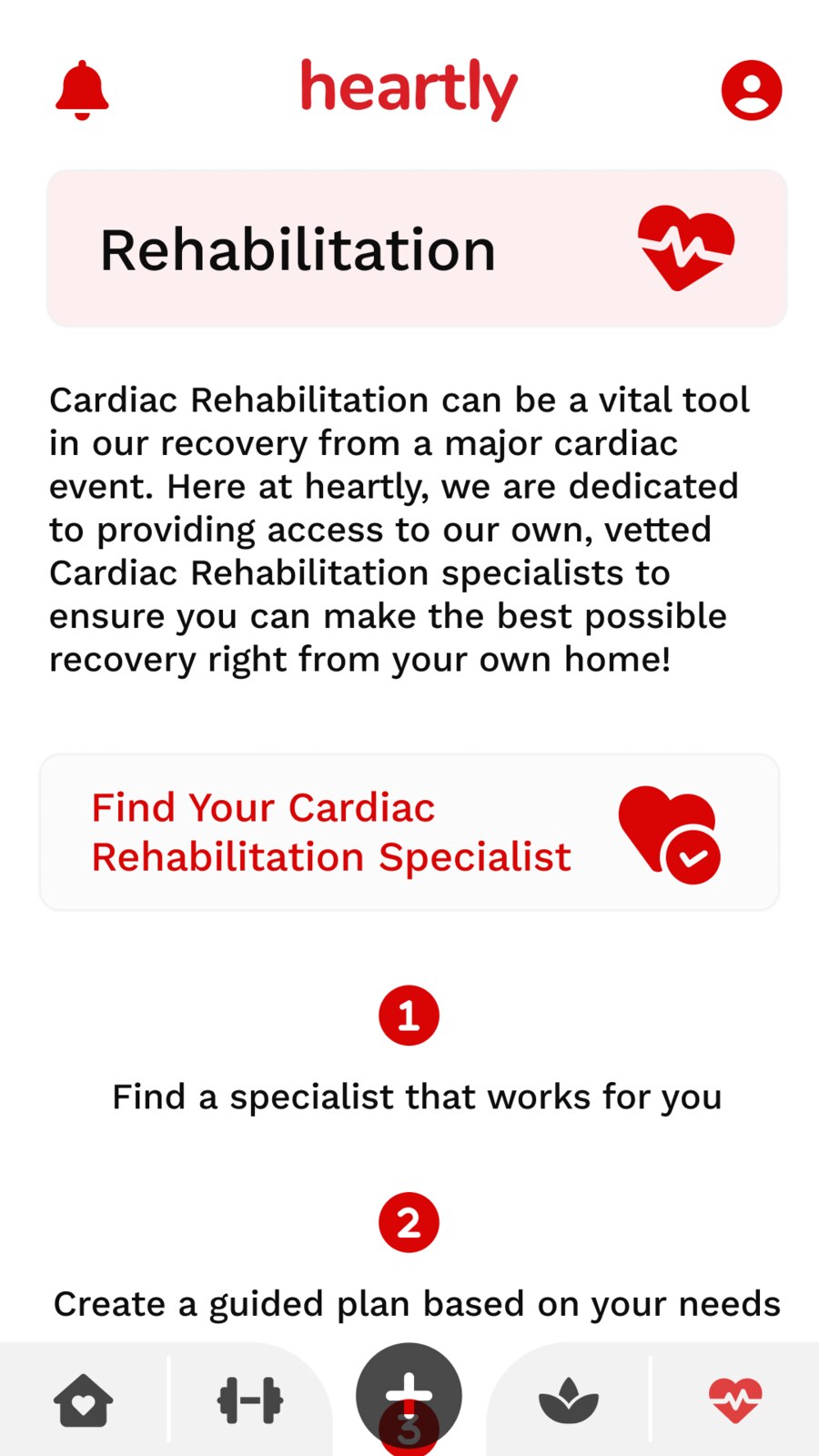
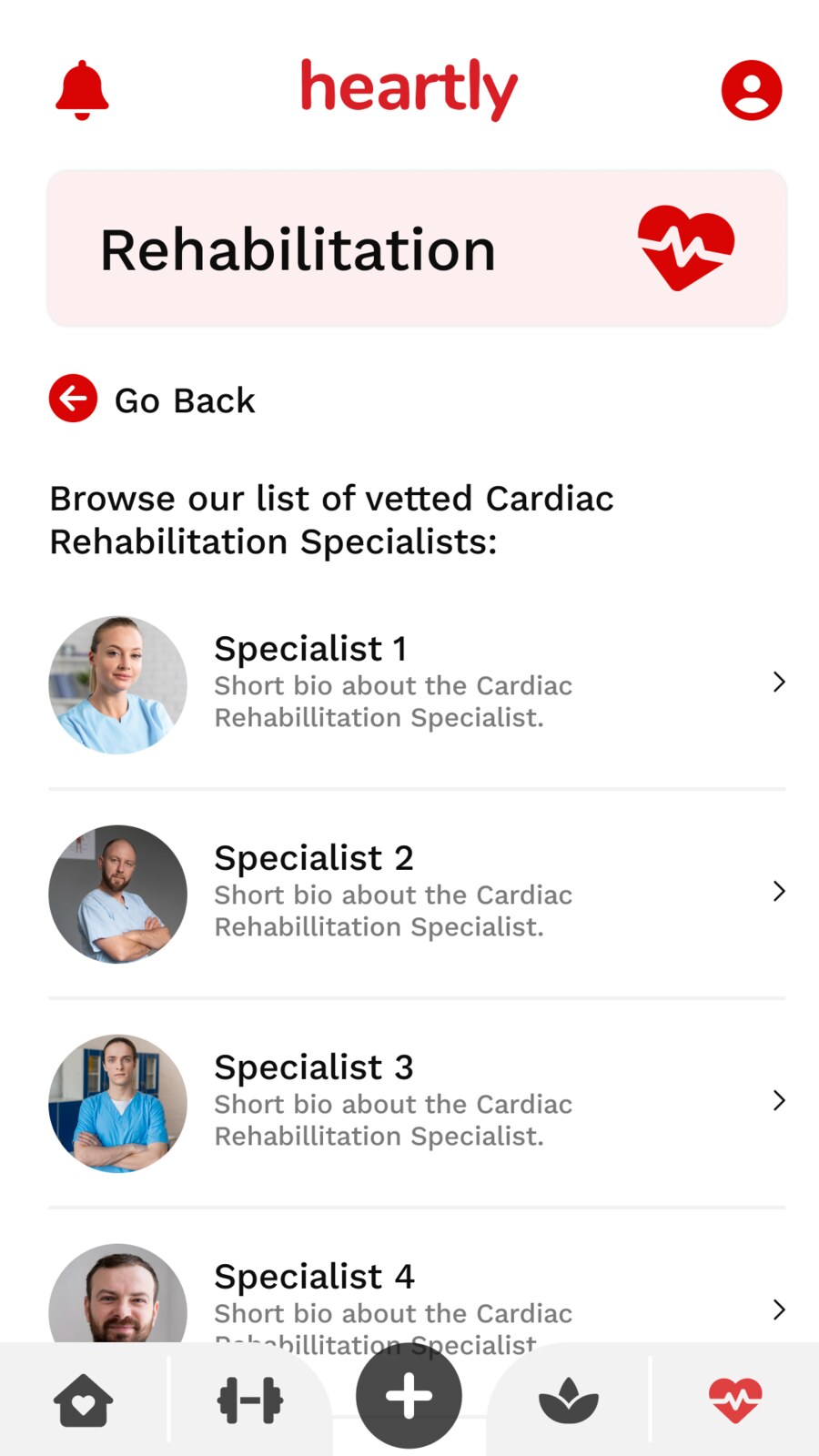
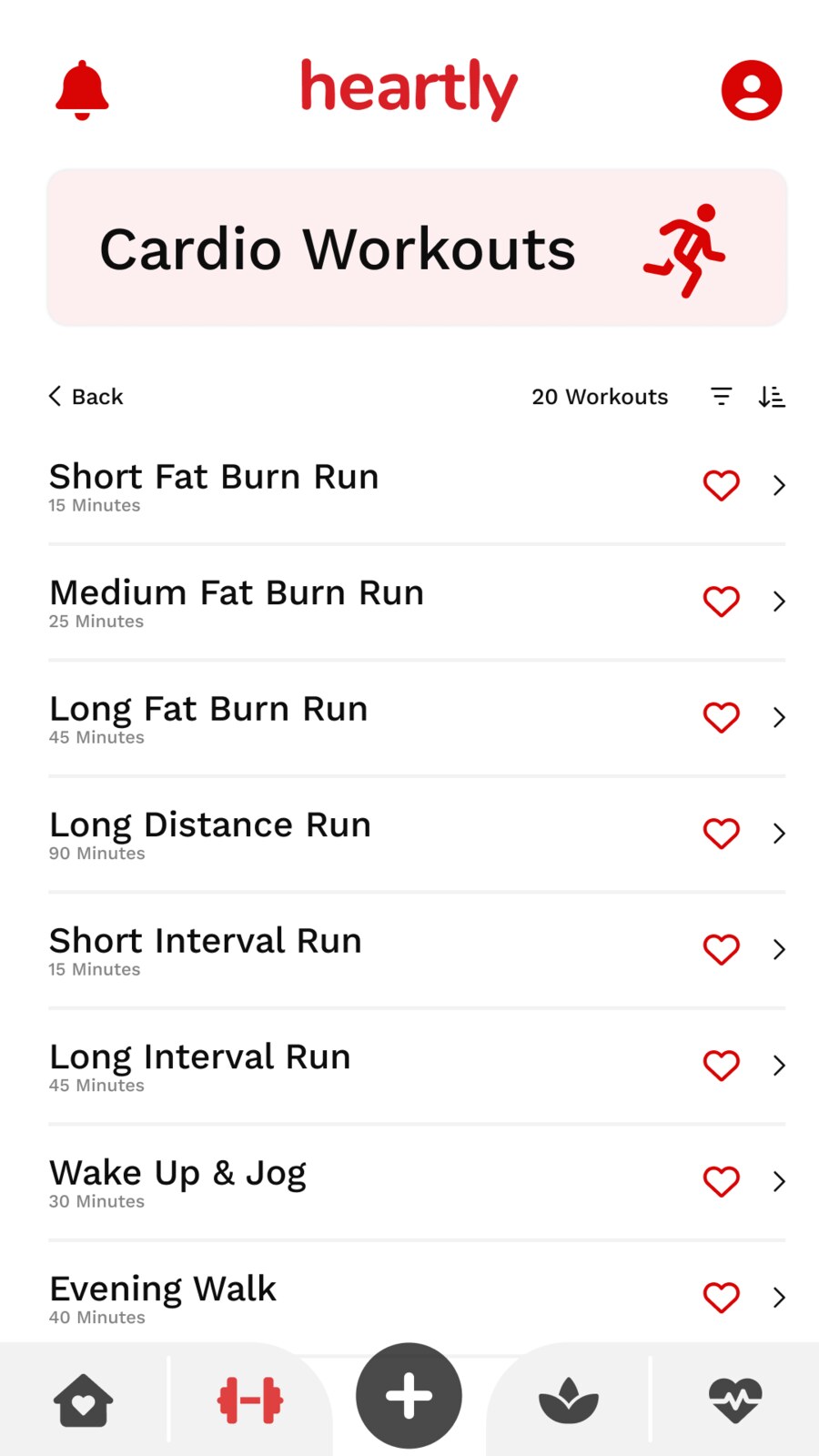
Heartly is a mobile app concept giving young men who have suffered a heart attack remote access to personalised fitness programmes, cardiac rehabilitation specialists and mental health support, in one place. Developed as my MA Major Project, it combines primary research into a genuinely under-served patient group with a full UX/UI process, from literature review and user interviews through to a working Figma prototype.
RoleUX/UI Designer & Researcher
Duration2025
PlatformiOS Concept · Mobile App
TypeMA Major Project
Overview
A digital route back to fitness after a heart attack
Myocardial infarctions, heart attacks, are rare in men under 45, but the number occurring in young adults has risen sharply in recent years, and men account for around 90% of this demographic. The physical and psychological toll can be significant: it can take months to rebuild physical fitness, and depression and anxiety are common effects of recovery that are often overshadowed by the physical impact.
Cardiac rehabilitation (CR), a structured programme of exercise, education and support, is a vital part of that recovery. But uptake is low, particularly among younger patients who struggle to commit to in-person appointments alongside work and family life. Heartly explores whether a mobile app could bridge that gap, bringing CR, personal training and mental health support to patients remotely.
The Brief
Cardiac rehabilitation isn't reaching the people who need it
In-person cardiac rehabilitation has a documented low uptake rate, as low as 30% in some studies, and a high drop-out rate among those who do start a course. For younger patients balancing work, family and a busy life, travelling to repeat appointments is a genuine barrier, and NHS digital tools have historically been slow to modernise, leaving few remote alternatives.
The project set out to answer three questions: are there enough tools for young MI patients to return to their former fitness levels; do younger patients experience a different mental and physical impact to the older demographic typically associated with heart attacks; and are patients more likely to take part in cardiac rehabilitation if they can access it remotely.
Research
Grounding the brief in lived experience and clinical evidence
Research began with a literature review into MI recovery, cardiac rehabilitation and existing digital health tools, alongside first-hand insight of my own, having suffered an MI at 29. This was followed by primary research under a full ethics review: an anonymous questionnaire and up to five in-depth participant interviews, both built around informed consent and the option for participants to opt in to later user testing.
A review of the existing market, including apps such as MyHeart, Cardihab and CardioSmart360, found genuinely useful tools for tracking and education, but a consistent gap: none offered a route to a personal trainer or a genuinely personalised recovery programme aimed at younger patients. That gap, combined with the qualitative research, shaped Heartly's core proposition.
The User
Designing around Mike
Research findings were distilled into a primary persona: Mike, 34, a graphic designer with a family who suffered an MI out of the blue with no prior health conditions. Mike gave the project a concrete set of goals and frustrations to design against, rather than a general, faceless audience.
Regain his physical fitness
Access mental health support
Structure recovery around a busy life
Regain the confidence he had pre-MI
Frustrated by long NHS waiting times
Frustrated private care is costly and time-consuming
Process
From concept sketches to a working Figma prototype
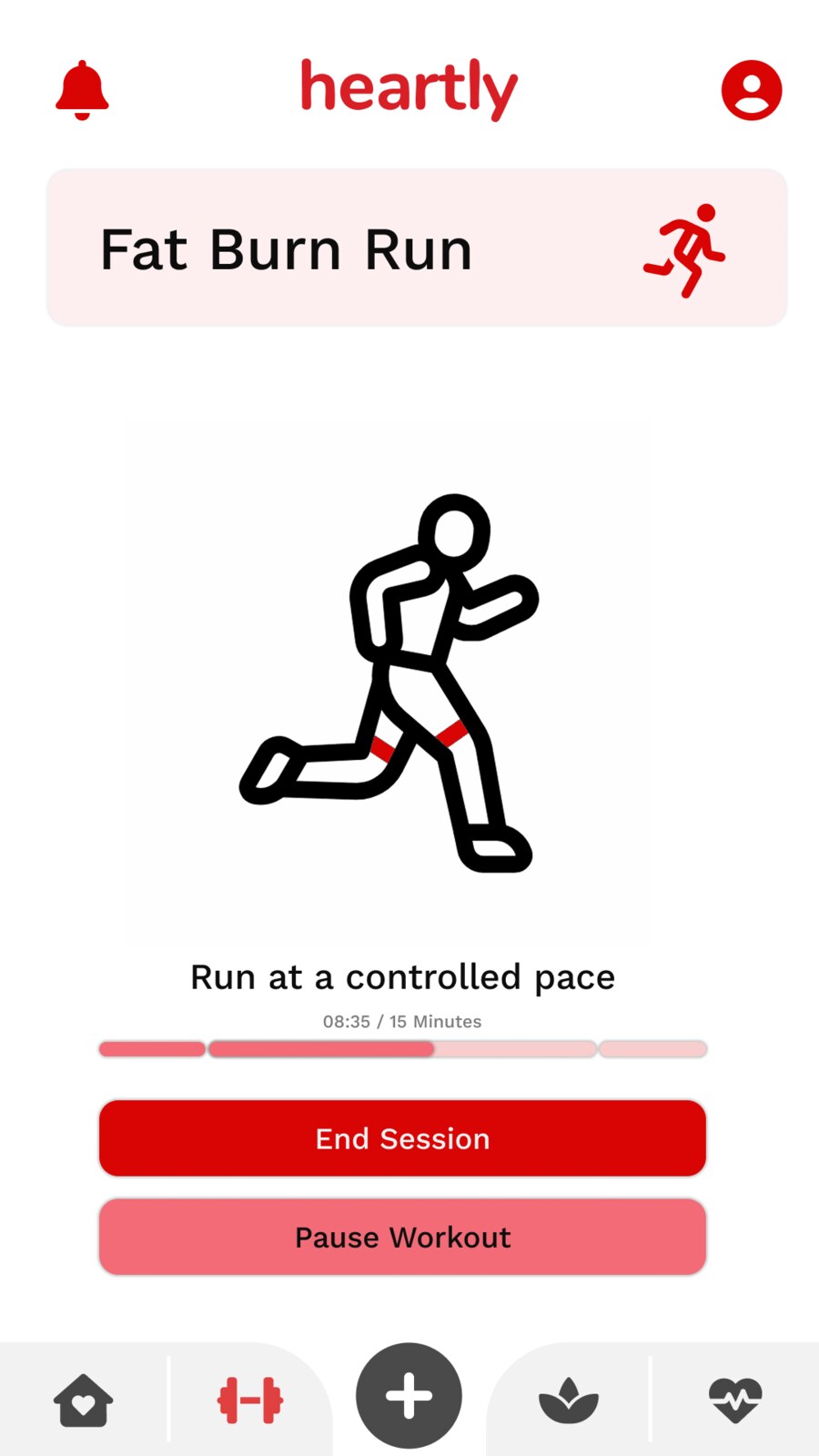
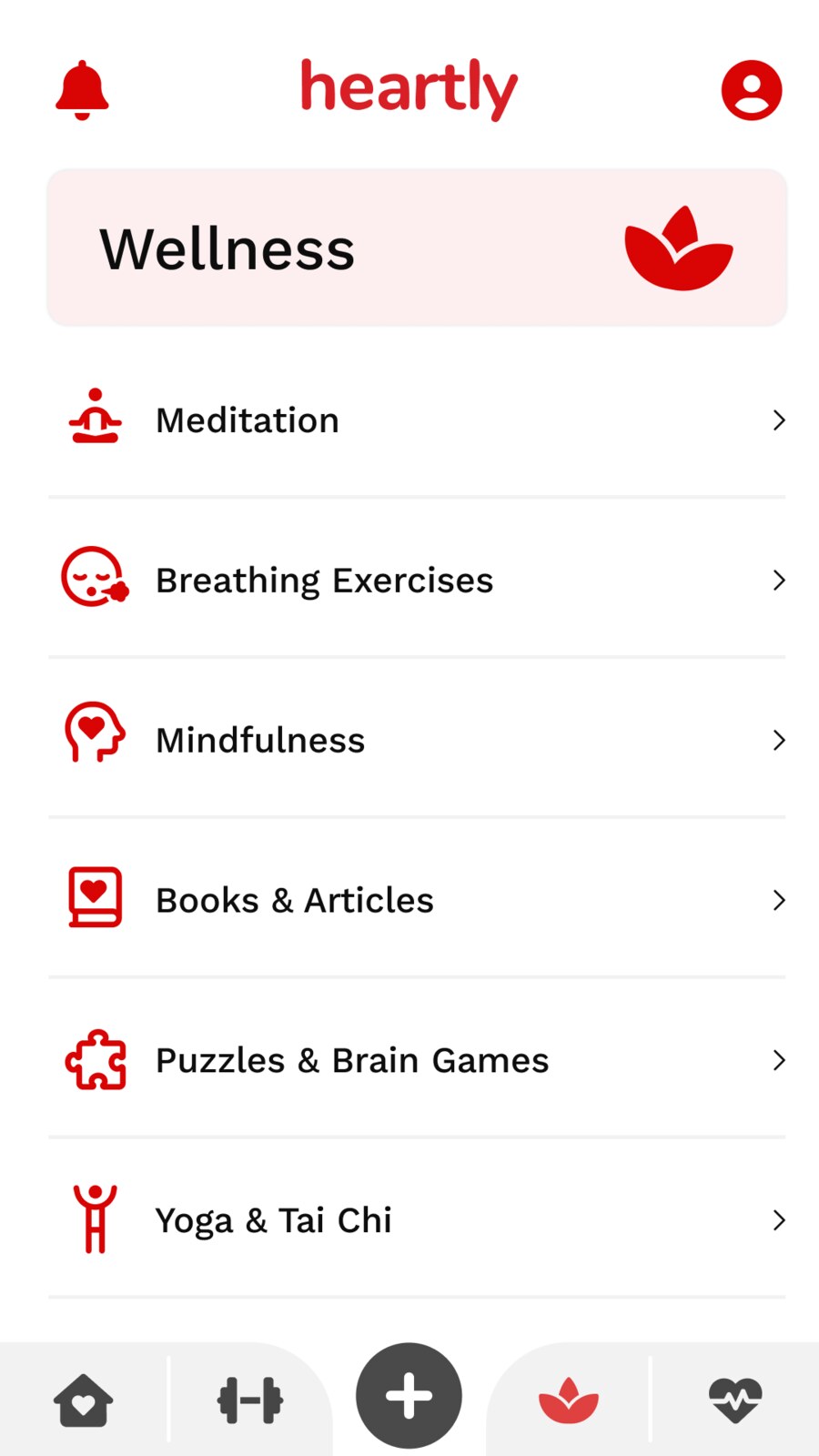
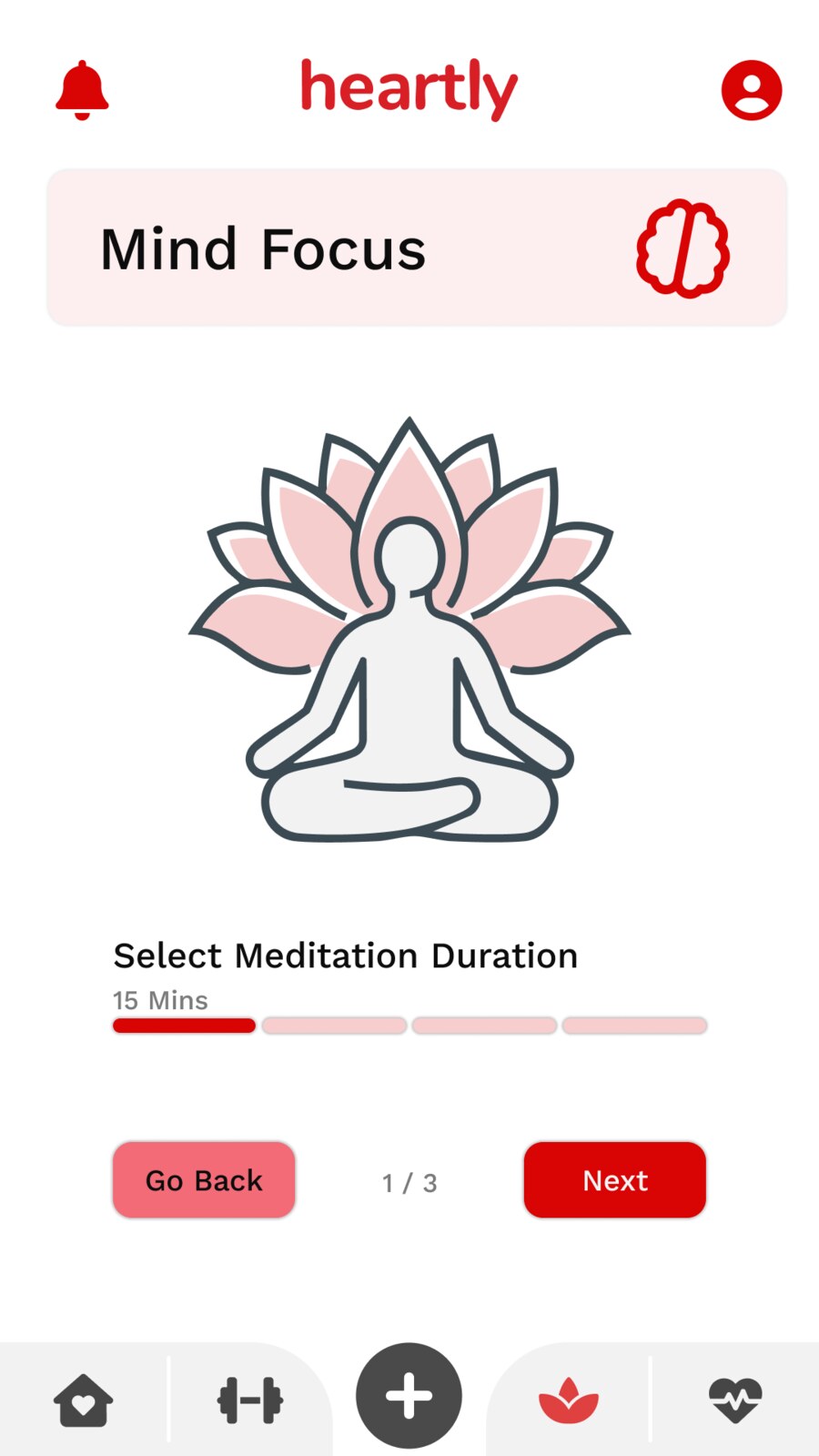
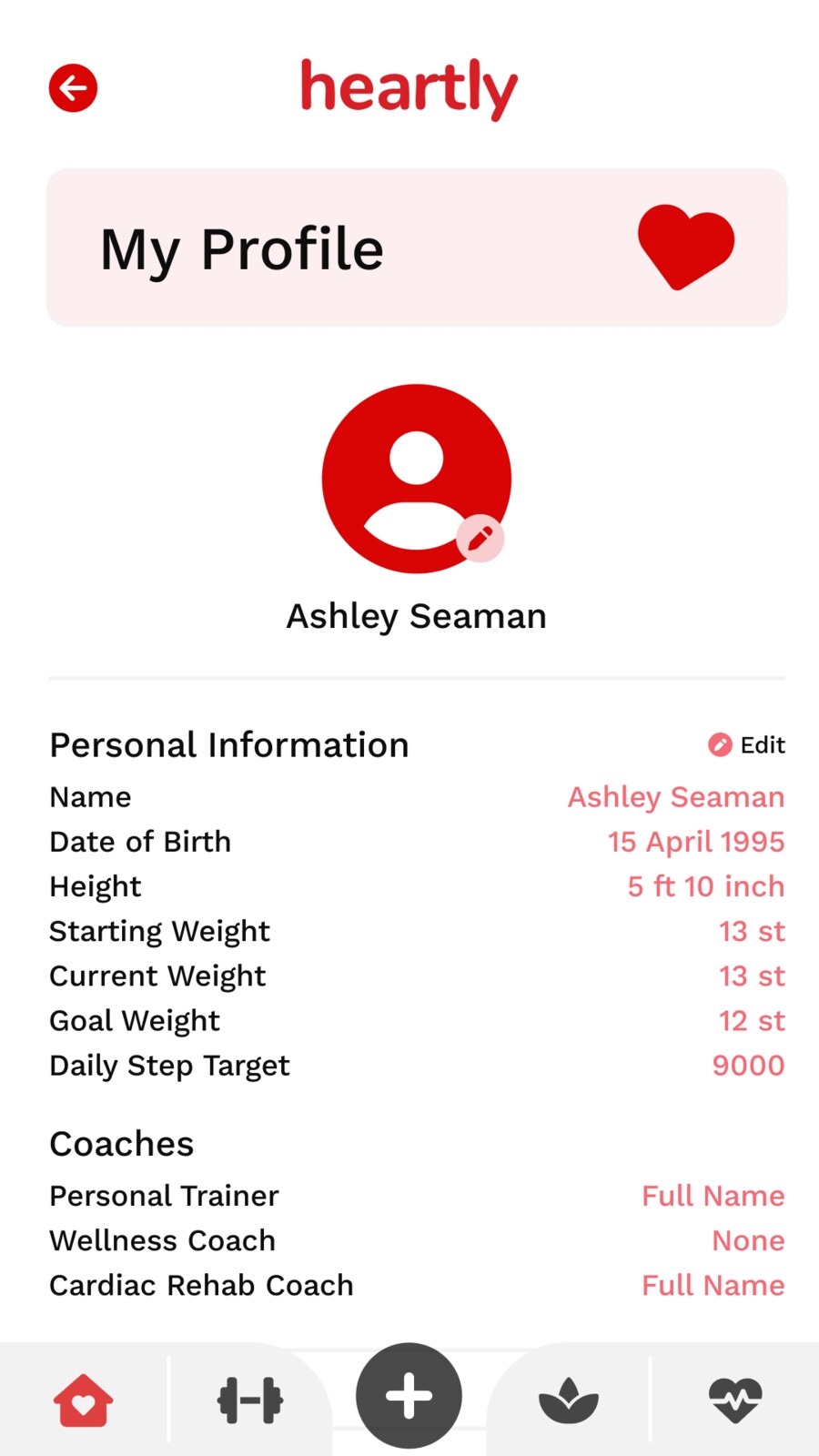
With the persona and research findings in place, the design moved through concept sketches and wireframes before a full brand identity, colour, typography and the Heartly logo, was developed to give the app a calm, trustworthy feel appropriate to a health context. The interface itself was kept deliberately minimal and flat, prioritising clarity for users who may be dealing with stress or reduced concentration during recovery.
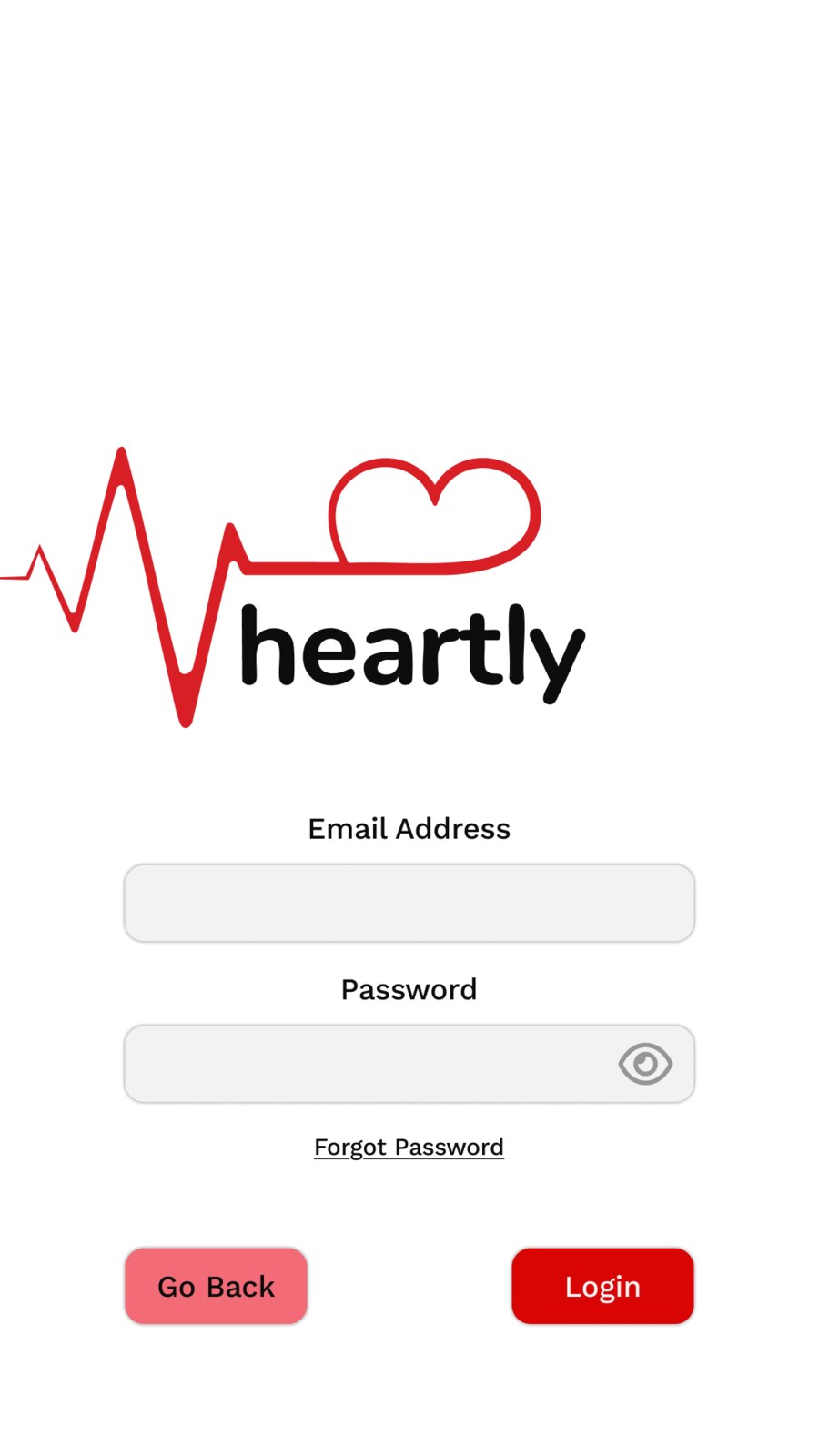
Figma was used to bring wireframes, brand and prototype together in one place, with user flows mapped out for core tasks, such as onboarding and connecting with a cardiac rehab specialist or personal trainer, to keep navigation as simple as possible. A cohort of research participants who opted in were then given the opportunity to test the prototype, surfacing navigation issues and validating whether the flows actually worked as intended.
Heartly is an academic design concept developed for an MA Major Project. It is not a certified medical product, and at this stage of development is not intended as a substitute for professional cardiac rehabilitation advice.
Deliverables
What was produced
Literature review & competitor analysis
Ethics-approved questionnaire & interviews
User persona & user flows
Wireframes & UI concept sketches
Full brand identity & logo
High-fidelity interactive Figma prototype
Interactive Prototype
See it in motion
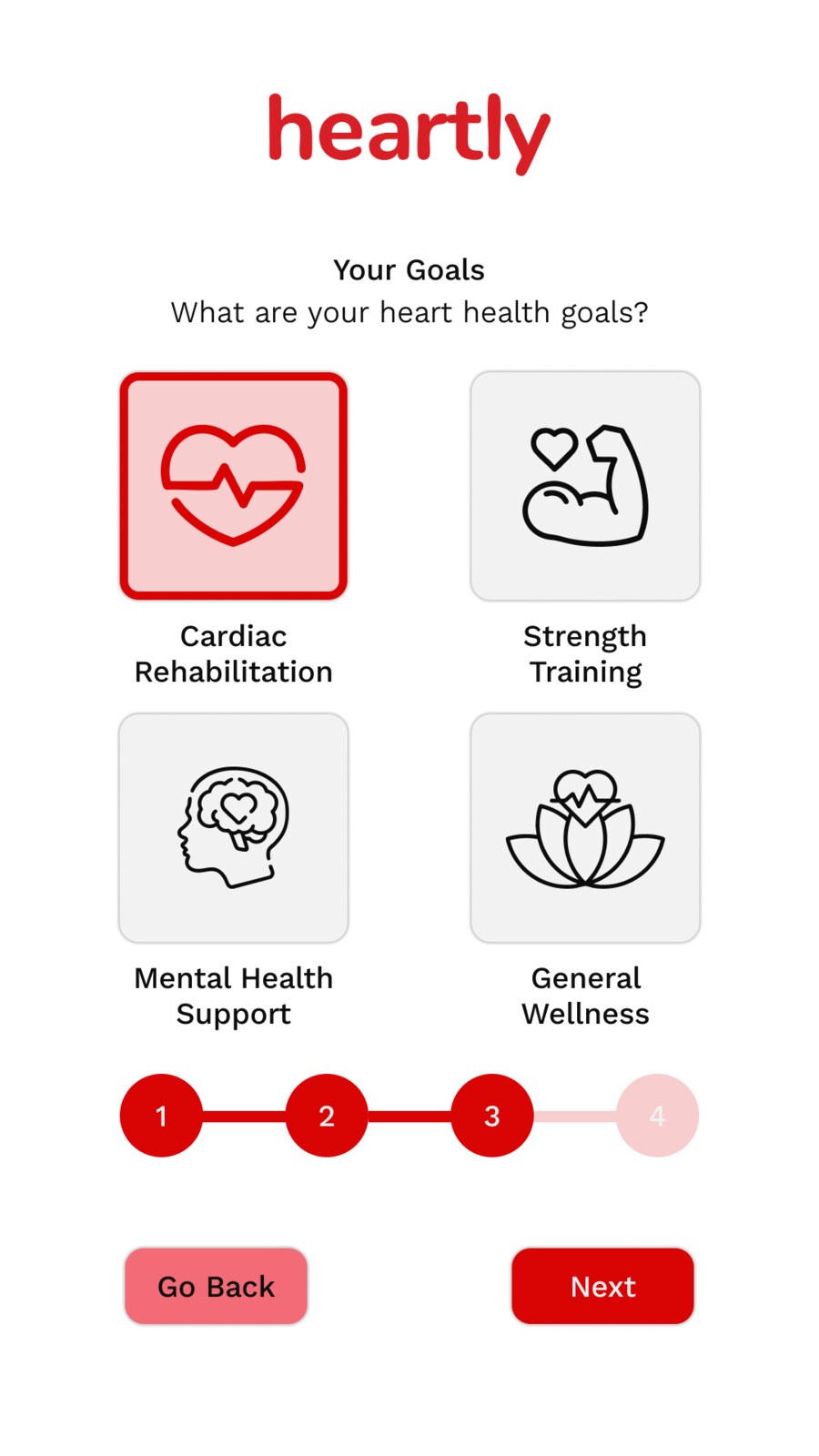
The high-fidelity Figma prototype brings the full onboarding and core app flows to life, giving a real sense of how a patient like Mike would move through the app on their own recovery journey.
Outcome
A validated concept for an under-served niche
User research confirmed genuine demand among young MI patients for remote access to cardiac rehab specialists, personal trainers and mental health support.
A complete brand identity and high-fidelity interactive prototype, taking Heartly from a research question to a tangible, testable product.
Evidence of a clear, largely unaddressed gap in the market for younger patients, distinct from existing tools aimed at an older demographic.
Lessons Learned
What this project taught me
Physical and mental recovery can't be designed separately
Participant research kept surfacing the same pattern: physical rehabilitation gets the attention, while anxiety, low confidence and a sense of "invincibility" lost go unaddressed. Heartly's feature set had to give both equal weight from the outset.
Lived experience sharpens research
Having gone through an MI myself at 29 gave the project a level of empathy and detail that desk research alone couldn't. It also made it clear how important it was to keep the study's findings grounded in real participant voices, not just my own.
A "niche" gap is still a meaningful one
Young MI patients are a small demographic in clinical terms, but the impact on those affected is significant. Designing specifically for them, rather than adapting a generic older-patient tool, was what made the concept feel genuinely useful rather than a token feature.
There's a clear road to what's next
Further development would extend Heartly into a companion web app for wider accessibility, grow the network of coaches to include nutrition and lifestyle support, and introduce AI-assisted suggestions that adapt a patient's plan as their recovery progresses.
Designing for a sensitive health context?
Whether it's healthcare, wellbeing or another space where trust matters, I love turning research into considered, human product design.