An internal platform for customer support and client onboarding
As the Starboard Card platform grew, the internal team needed dedicated tooling to manage customer accounts, resolve support requests, and onboard new clients efficiently. This project designed that system from the ground up.
RoleUX/UI Designer
DurationMay 2023 — May 2026
TypeInternal tool / B2B
ToolsFigma
Overview
Building the tools behind the product
As the Starboard Card platform expanded across both mobile and web, the need for a powerful internal administration system became increasingly important. The customer relations and support teams were handling a growing volume of queries, onboarding requests, and account management tasks, without the tooling to do so efficiently.
This project designed a centralised admin platform specifically for those internal teams, giving them the visibility and control needed to support customers, onboard new clients and maintain operational oversight across the entire platform.
The Problem
Internal tools are often the last thing designed (and it shows)
The challenge was to design a system capable of handling large volumes of financial and user data while remaining genuinely intuitive for support staff who weren't necessarily technical. Unlike the customer-facing applications, the admin panel prioritised functionality, speed, and information density, but that couldn't come at the cost of usability.
The secondary challenge was confidentiality and security. The platform would give internal staff access to highly sensitive financial data, so access controls, auditability, and clear permission structures had to be designed into the architecture from the start rather than bolted on afterwards.
Research
Understanding how support teams actually work
The design process began with workshops and feedback sessions involving customer relations staff and operational stakeholders. The goal was to understand how support requests were handled in practice, what information teams needed immediately, where friction in existing workflows was causing delays, and what a new tool could address.
These sessions defined the core structure of the platform. Customer account management, transaction visibility, card controls, onboarding workflows, verification processes and fleet-level account oversight. Crucially, they also revealed the difference between what teams thought they needed and what they actually needed, a distinction that shaped several important design decisions.
Design Process
Designing for speed, density and trust
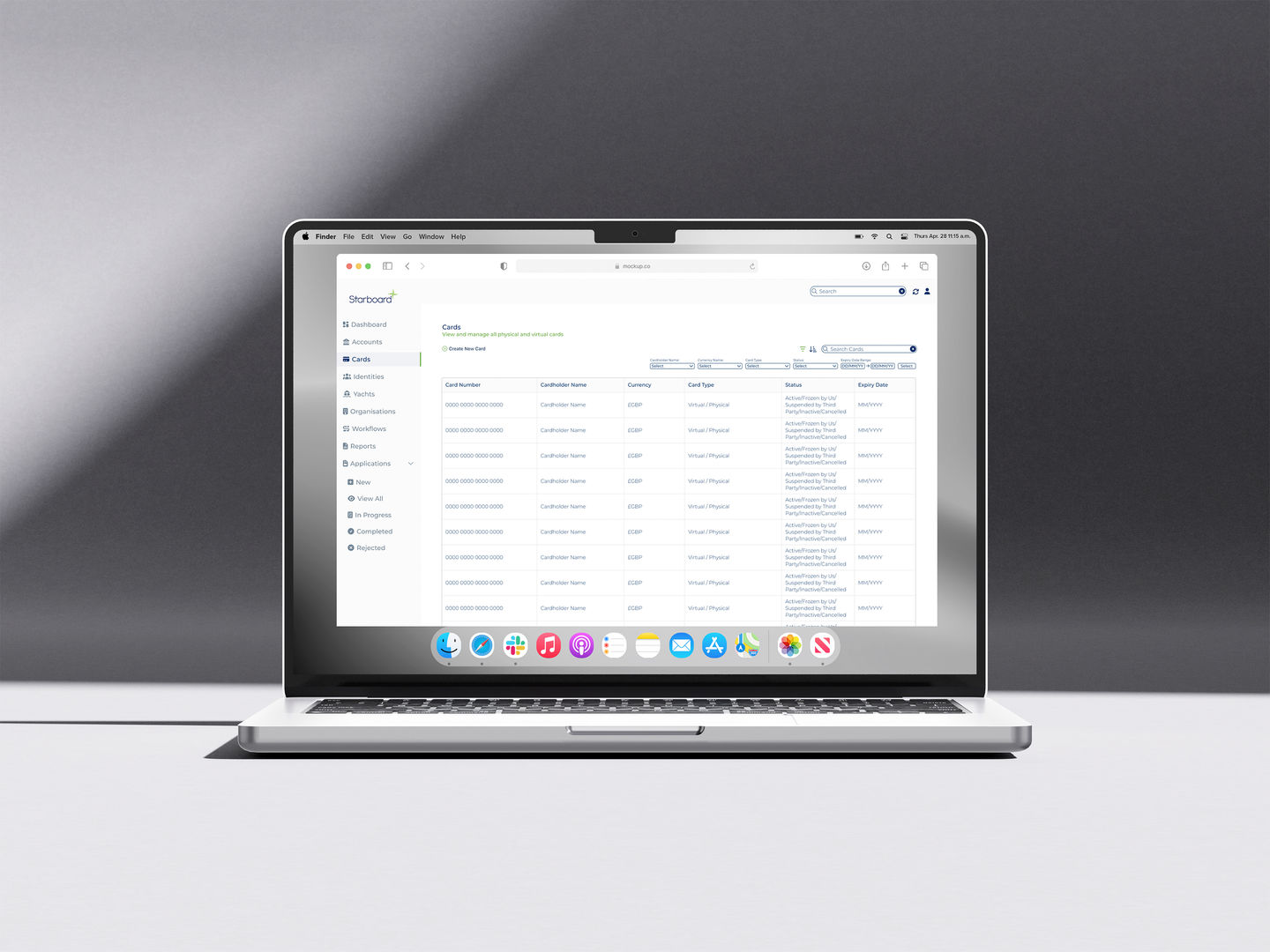
A major focus of the design process was creating clear information architecture across large datasets. Support staff needed to be able to locate a specific customer, view their complete financial profile and understand their account status within seconds. This required careful hierarchy in the data presentation and strong search and filter functionality that worked at scale.
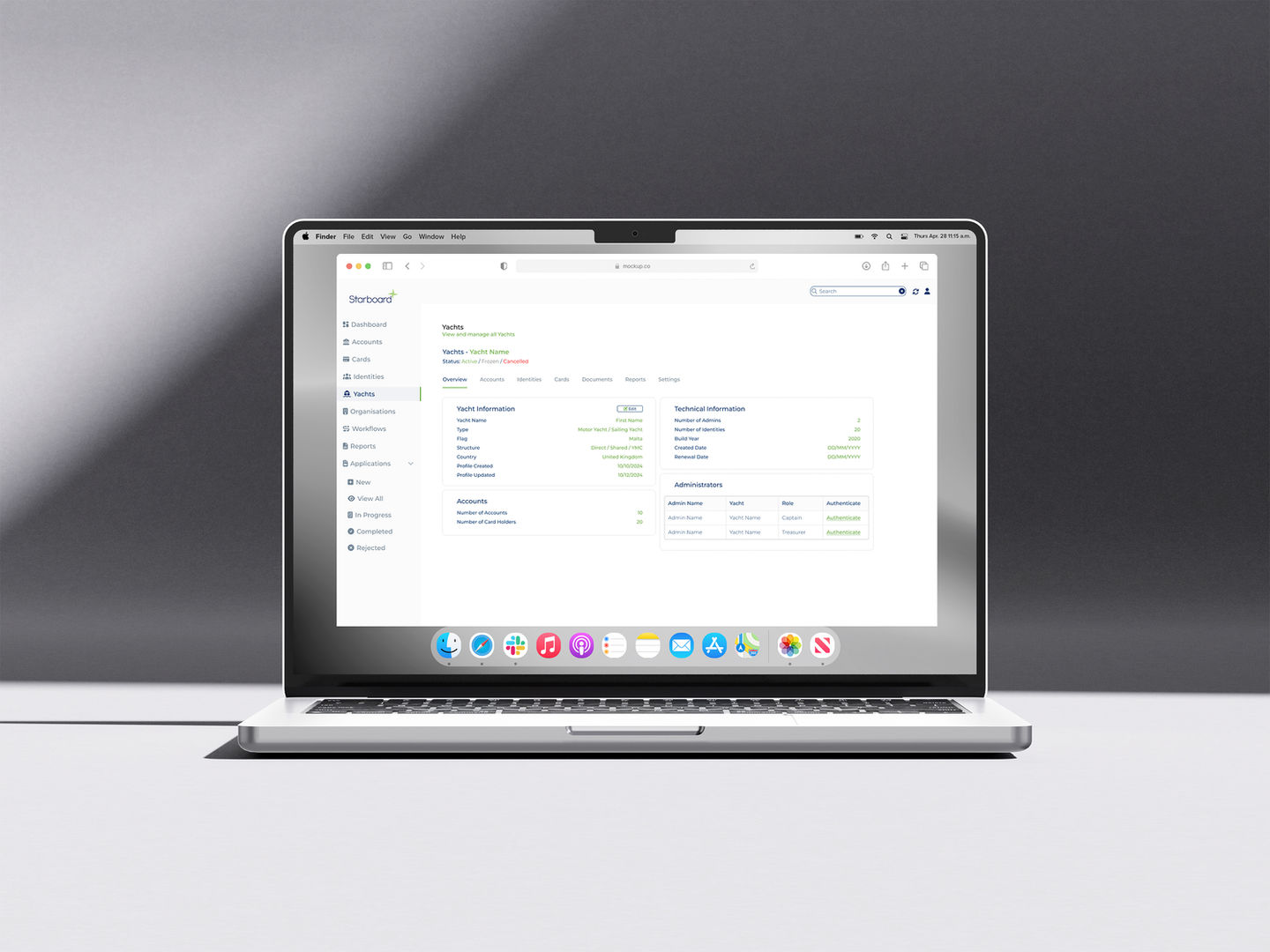
The onboarding flows presented a different challenge. Structured, step-by-step processes that had to remain compliant with financial regulation while being simple enough for staff to execute quickly. Dedicated workflows were designed for account setup, identity verification, document management and vessel registration, each with clear progress indication and error handling.
The panel was designed and iterated through multiple rounds in Figma, with continuous testing and feedback from the internal teams using it. Workflows were refined as real operational edge cases emerged, ensuring the final system reflected how the team actually worked rather than how we imagined they might.
Deliverables
What was designed
Customer account management dashboard
Transaction visibility and audit trails
Card controls and status management
Client onboarding workflows
Identity verification processes
Fleet-level account oversight
Document management flows
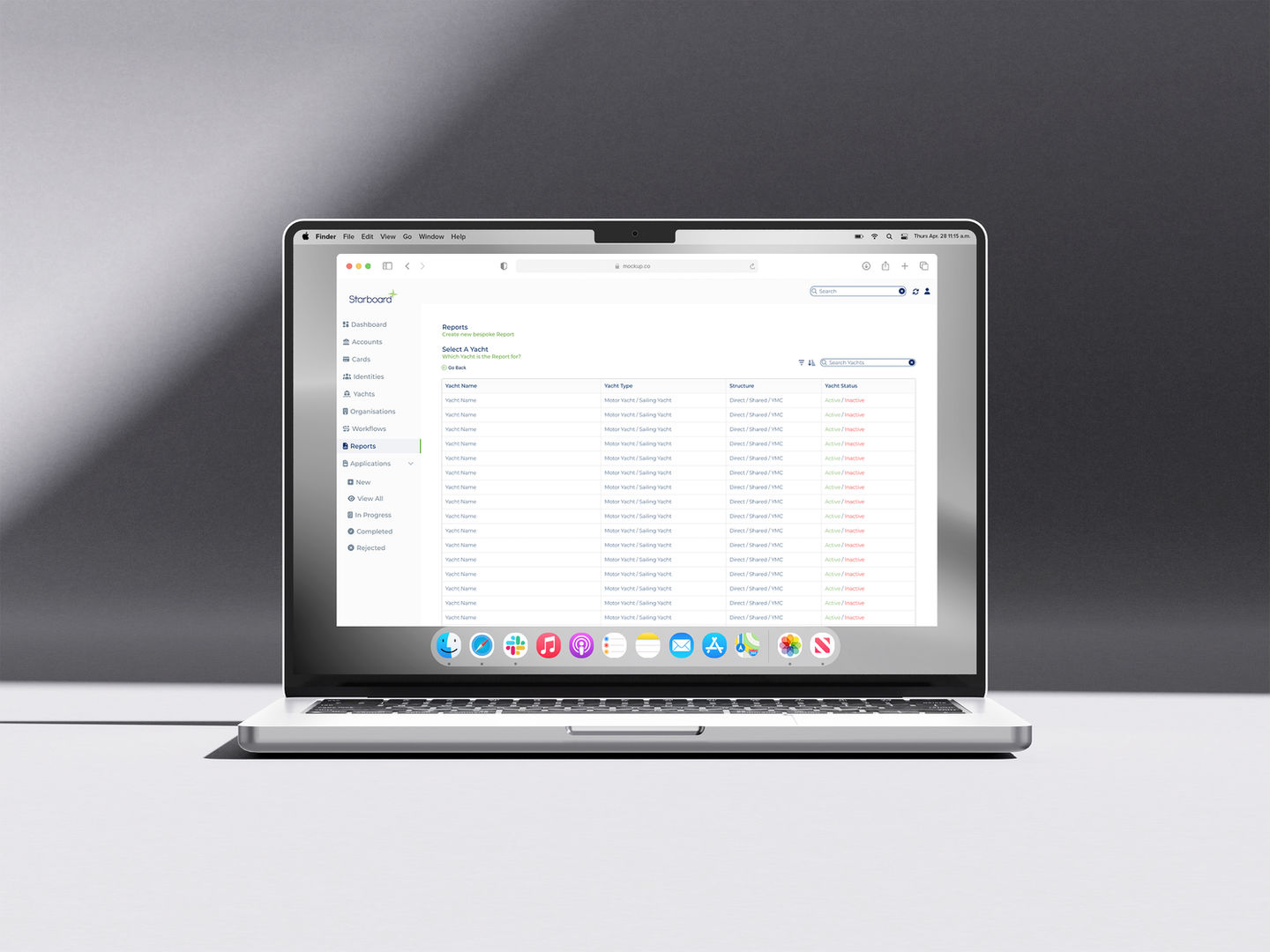
Report generation tools
Outcome
A system built to scale with the business
A robust internal management system that connected directly with the wider Starboard Card infrastructure, enabling the customer relations team to work from a single platform rather than across multiple disconnected tools.
Streamlined onboarding workflows that reduced the time and effort required to bring new clients onto the platform while maintaining the compliance standards required in a regulated financial environment.
A platform designed to scale alongside the company's operational growth, built iteratively so it could be extended as new requirements emerged without requiring a full redesign.
Lessons Learned
What this project taught me
Internal tools deserve the same design rigour as customer-facing ones
It's tempting to treat internal tooling as a lower priority. In practice, the efficiency of a customer support team directly affects the experience of every customer they interact with. Good internal design has a multiplying effect that's easy to undervalue.
Workshops are worth the time investment
The upfront research with the support team changed the design significantly before a single screen was finalised. Some of the most important insights, about how edge cases were actually handled, and where existing workflows were breaking down, only emerged through structured conversation, not through observing the existing process from a distance.
Security and usability are not opposites
Designing clear permission structures and audit trails into the system didn't have to mean making it harder to use. With thoughtful information architecture, the two goals reinforced each other. A well-organised system is easier both to use and to audit.
Only a selected portion of screens are shown here. The designs shown are conceptual representations created for portfolio purposes and do not reflect the final design, live data, or sensitive information used within the production admin panel deployed by Starboard Card. This approach has been taken to protect the privacy, security, and integrity of a high-security financial management system.
Working on something similar?
I'm available for UX/UI and product design work. Let's talk about your project.